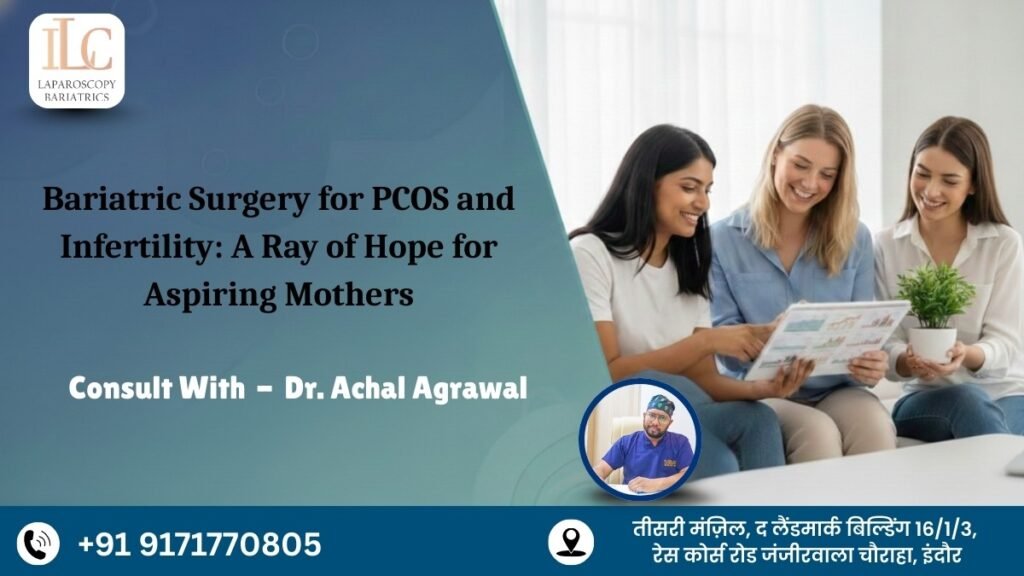
Polycystic Ovary Syndrome (PCOS) treatment Indore has been gaining popularity among women, particularly in those who have a problem with excess weight. PCOS is not a gynecological disease; it is a metabolic and hormonal disease that has a direct impact on ovulation and fertility. Natural conception is very hard to have since many women who are attempting to conceive are met with numerous disappointments due to the fact that obesity enhances insulin resistance and hormonal imbalance. Simply speaking, as the weight increases, hormones become out of balance, and the body no longer ovulates regularly.
The Link Between Weight Loss Surgery and Hormonal Balance
Bariatric surgery for PCOS infertility is quite effective. Body fat leads to insulin resistance, which raises testosterone levels. Excessive insulin and testosterone interfere with ovulation and menstruation. Weight loss surgery enhances insulin sensitivity and reduces testosterone levels, restoring hormonal balance. The lighter the weight, the more regular the period becomes, ovulation is restored, and fertility increases. This is the reason why bariatric surgery in the treatment of PCOS can be seen as a metabolic therapy rather than a weight-loss therapy.
Proven Benefits: Fertility After Bariatric Surgery
Much promising evidence of the close outcomes of bariatric surgery in women with PCOS is presented in clinical studies. Studies depict that 60 to 70 out of every 100 women with PCOS have a chance of giving birth naturally after having undergone substantial weight loss after surgery. PCOS symptoms like irregular periods, acne, and excessive hair growth are also fully resolved in many patients. These consequences indicate the close relationship between Weight loss surgery and pregnancy planning in the event of failure of conservative treatments.
The Right Time to Plan Pregnancy
Timing plays a vital role in the post-bariatric surgery period. The majority of specialists suggest that it is better to wait 12 to 18 months after surgery and then attempt to conceive. This phase gives the body time to stabilize both nutritionally and hormonally, enabling optimal weight loss. Premature conception can have nutritional risks for the mother and the baby. Follow-ups, supplementation, and medical advice make pregnancy safe and healthy.
Conclusion
Dr. Achal Agrawal reports that a significant number of women with long-term PCOS and infertility have been able to conceive after undergoing a metabolic surgery in the form of bariatric surgery. His exposure to complicated cases of obesity related hormones proves that the rectification of the metabolism will restore fertility where all other treatment methods have failed. Bariatric surgery provides new hope to female cancer patients who have been battling for years.
Call to Action
In case PCOS and weight are undermining your fertility, it is the first step to metabolic healing. Make an appointment to consult with metabolic health at our center and discover the evidence-based solutions that are safe and can help make the future healthier.