
The weight loss after Bariatric Surgery is a gradual process and not an overnight change. The course of treatment varies per patient, dependent on the nature of the operation, initial weight, diet, exercise and general well-being. This guide will provide you with a general idea of the weight loss timeline you should expect with bariatric surgery, what factors can affect your results and how you can achieve long-term success with your surgery.
How Does Bariatric Surgery Help You Lose Weight?
Bariatric surgery works to lose weight by decreasing the amount of space in the stomach so that you feel full when you eat smaller amounts. Other procedures also impact hunger hormones, and it can be easier to manage appetite. Surgery is a tool, however, not a cure! Maintaining a Healthy Lifestyle, regular exercise, and follow-up appointments are important for long-term success.
How Much Weight Can You Lose After Bariatric Surgery?
Patients typically lose weight from the extra weight, not their all body weight. This can vary based on the surgery and the individual patient. When you follow your Doctor’s Advice and eat right, a lot of patients lose a significant amount of weight within the first year.
Month-by-Month Weight Loss Timeline
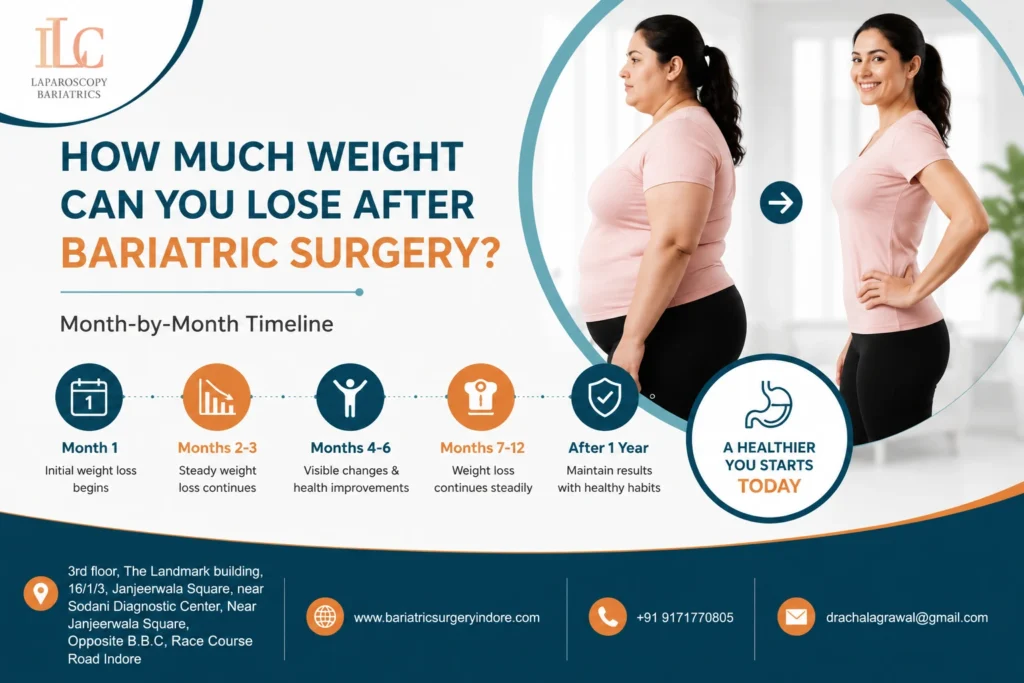
Month 1
The first month is the healing month. As you heal, you will go from a liquid diet to soft foods. This is typically when weight loss is most evident.
Months 2–3
The more your diet grows, and the more you become active, the more essential healthy eating habits become. Many patients experience observable changes in their bodies, greater mobility and increased vitality.
Months 4–6
Obesity-related complications like sleep apnea, high blood pressure or type 2 diabetes might start to improve, and weight loss is steady. Follow-up with a high-protein diet and activity after bariatric surgery may assist with improving results.
Months 7–12
Weight loss usually slows down, but it continues at a healthy rate. This time is dedicated to establishing long-term sustainable lifestyle habits which will lead to success.
After One Year
The majority of patients attain a steady weight zone. To ensure the results are maintained, good eating, exercise and regular medical follow-up becomes crucial.
Factors That Affect Weight Loss Results
There are several factors that affect Weight Loss After Bariatric Surgery, such as:
- Type of bariatric surgery
- Starting BMI
- Age and metabolism
- Consuming protein and eating right.
- Physical activity
- Existing medical conditions
- Regular follow-up appointments
Is It Possible to Gain Weight Again After Bariatric Surgery?
Yes. Weight Regain is possible if healthy habits are not maintained. Frequent snacking, high-calorie beverages, lack of exercise, and missed Follow-Up Appointments can contribute to gradual weight gain. Long-term success depends on treating surgery as the beginning of a healthier lifestyle—not the final solution.
Tips to Maximise Weight Loss After Surgery
So that the best results are obtained:
- Consume protein foods.
- Stay well hydrated.
- Take a stroll every day and build up a tolerance to physical activity.
- Use recommended vitamin supplements.
- Get adequate sleep.
- Stay clear of sugared beverages and junk food.
- Follow up with the bariatric team on all scheduled appointments.
When Should You Contact Your Bariatric Surgeon?
If you notice:
- Rapid weight loss early in recovery.
- Persistent vomiting
- Trouble eating or drinking
- Nutritional deficiencies, including their signs and symptoms.
- Significant weakness or dehydration.